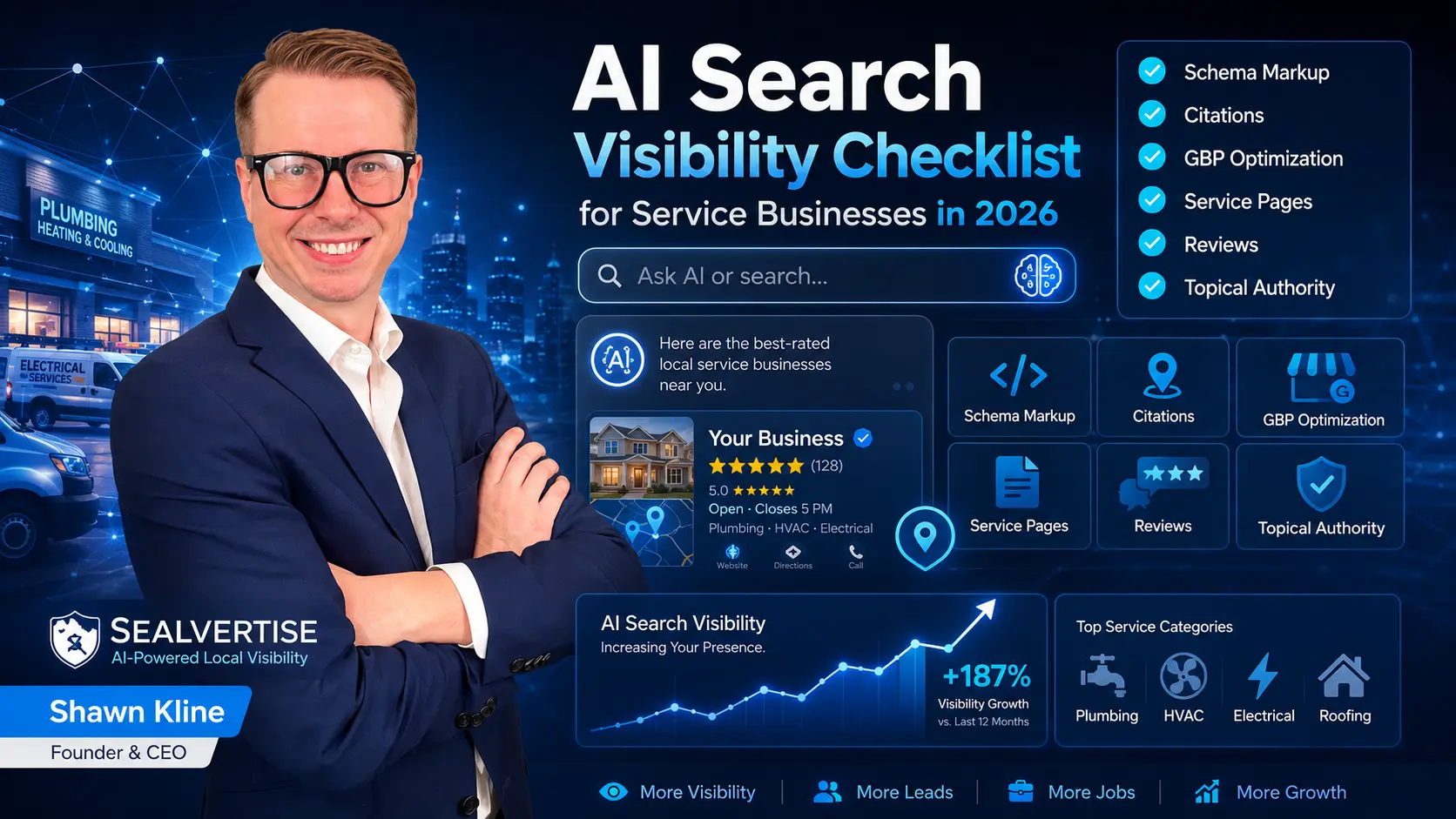
How to Track AI Search Visibility: Google AI Overviews, ChatGPT, and Copilot
If you run a service business and you’ve been paying attention to search trends, you’ve noticed something changing. Google shows…

An on-page SEO checklist is a practical way to optimise every page of your website so it ranks higher, attracts the right visitors, and converts them into customers. For small business websites, this matters even more because visibility often means the difference between getting leads or getting ignored.
At Sealvertise, we’ve seen that most small businesses don’t fail because they lack effort—they fail because their websites are not properly optimised at the page level. Google now prioritises content relevance, user experience, and intent over simple keyword placement.
A clear checklist helps you fix the right things quickly, improve search visibility, and turn website traffic into real business results.
‘On-page SEO’ refers to everything you optimise directly on your website pages. This includes content, structure, metadata, and user experience.
For small businesses, on-page SEO is often the fastest way to improve rankings without heavy investment in backlinks or ads.
Google considers many factors when ranking pages. Research shows that content quality, relevance, and user experience are among the most important. Many websites fail because they ignore these basics.
On-page SEO helps you:
For example, a local law firm with properly optimised service pages can rank for “divorce lawyer near me” and generate consistent enquiries.
A strong on-page SEO checklist ensures every page is optimised consistently. Missing even one element can reduce your chances of ranking.
For example, a plumbing website should include keywords like “emergency plumber in Dallas” in titles, headings, and content naturally.
Many businesses improve performance faster by refining these elements through structured SEO services that align content with search behaviour.
One of the biggest reasons pages fail is ignoring search intent.
Search intent means understanding what users expect when they type a query. Google prioritises pages that match this intent clearly.
There are three main types:
If your content does not match intent, it will not rank—even if optimised.
For example:
If you’re unsure why your pages are not performing, reviewing our guide on why your website isn’t ranking can help you identify intent gaps.
Technical elements directly support on-page SEO performance. Without them, even great content may struggle.
You can test performance using Google PageSpeed Insights: pagespeed web dev
Google Search Central confirms that page experience plays a major role in rankings.
Small businesses often overlook these details, but fixing them can lead to immediate improvements in visibility.
Local businesses benefit significantly from strong on-page SEO. Optimising for location helps you appear in local search results.
For example:
You can also enhance visibility by aligning your site with your Google Business Profile.
Learn more from Google: support google, Local relevance increases both rankings and trust.
On-page SEO is not just about rankings—it directly affects conversions.
When a page is well-optimised, it:
For example, a law firm page with clear services, testimonials, and structured content will convert better than a generic page.
SEO and conversion optimisation work together.
Businesses that refine both often see a better ROI. When improvements require deeper strategy, reviewing your approach or connecting through Sealvertise can help clarify next steps.
‘On-page SEO’ refers to optimising elements directly on a webpage, including content, titles, headings, and user experience, to improve search rankings and visibility.
A checklist should include title tags, meta descriptions, headings, keyword placement, internal links, image optimisation, page speed, and mobile usability.
You should review and update on-page SEO every few months or whenever you update content. Regular improvements help maintain rankings.
Yes, on-page SEO helps local businesses appear in search results by improving relevance, location targeting, and content quality.
Yes, optimised pages improve user experience, build trust, and guide visitors toward actions, increasing both leads and sales.
A strong on-page SEO checklist helps small businesses improve visibility, build trust, and convert more visitors into customers.
From optimising titles and content to improving speed and mobile usability, each element plays a role in how your website performs.
Consistent page-level optimisation creates long-term growth. It ensures your website not only ranks but also delivers real business results.
For businesses that want to go beyond basic optimisation and build a scalable strategy, working with a data-driven partner like Sealvertise can help align SEO with measurable growth outcomes.