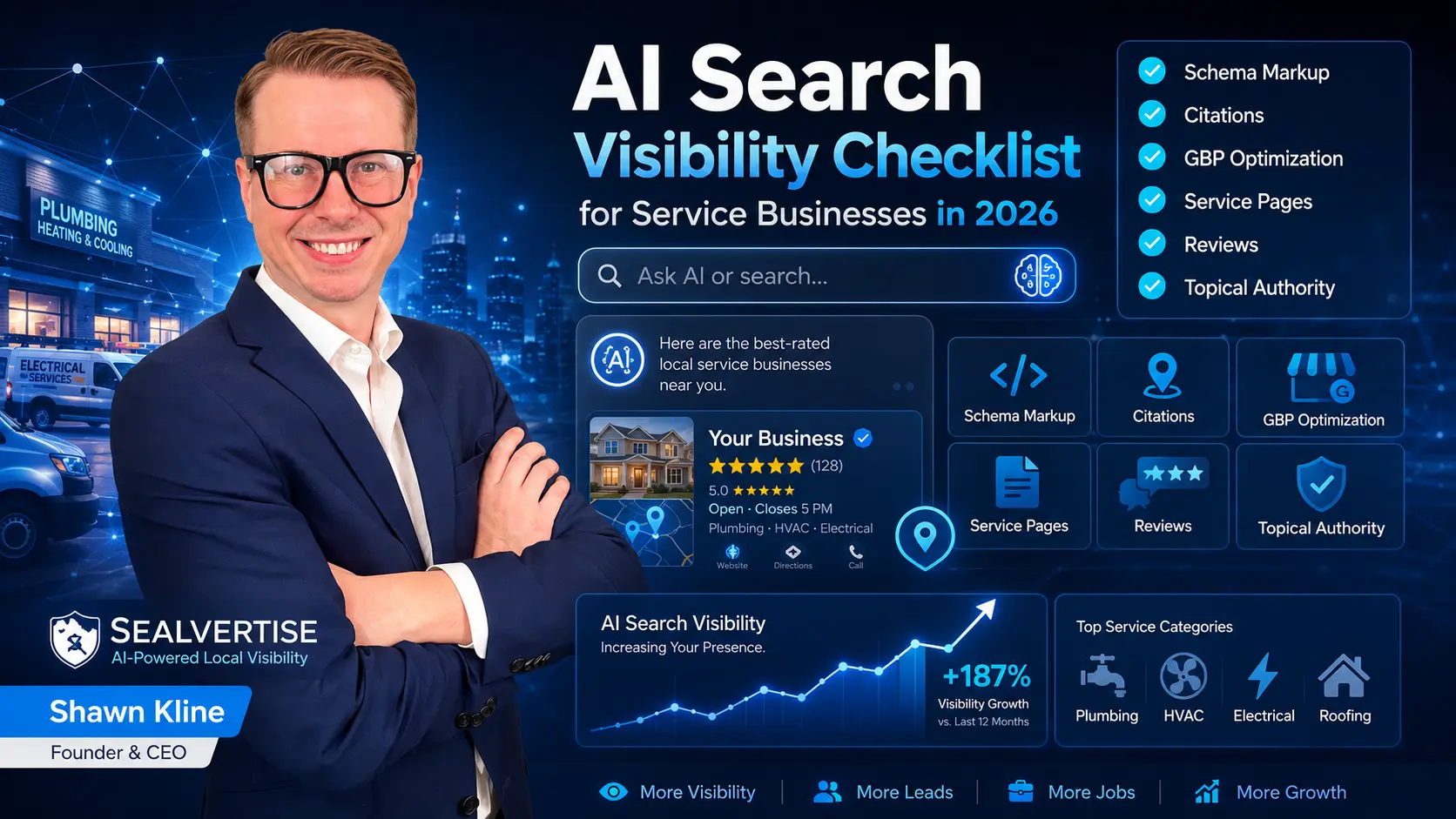
How to Track AI Search Visibility: Google AI Overviews, ChatGPT, and Copilot
If you run a service business and you’ve been paying attention to search trends, you’ve noticed something changing. Google shows…

Most service businesses do not lose money on paid ads because Google Ads or Local Services Ads are bad. They lose money because they pick the wrong platform first, track the wrong number, or judge success by clicks instead of booked jobs.
If you are comparing local service ads vs google ads, the real question is not which platform is better. It is which platform fits your budget, service category, call capacity, margins, and need for speed right now.
This guide breaks down how Local Services Ads and Google Ads work, what they cost, when each one makes sense, and how service businesses can use both without wasting thousands of dollars in trial and error.
Local Services Ads are usually the better first move for eligible home service businesses that need calls quickly, want simpler setup, and prefer paying per lead instead of per click. Google Ads are usually better when the business needs landing page control, keyword control, promotion-specific messaging, deeper tracking, or visibility in a category that does not qualify for Local Services Ads.
The cost comparison is not just cost per click versus cost per lead. A $12 Google Ads click can become a $60 lead if the landing page converts 20% of visitors, but that same click becomes a $30 lead if the page converts 40%. That is why the real metric is cost per booked job, not cost per click, cost per lead, or impressions.
For many established service companies, the best long-term strategy is not Local Services Ads vs Google Ads. It is Local Services Ads plus Google Ads, with separate tracking numbers, clean reporting, and budget shifts based on booked revenue. The platform that produces profitable jobs should earn more budget.
Local Services Ads, often called LSAs, are Google ads built for service businesses that want phone calls, messages, and booking requests directly from Google Search. Google explains in its Local Services Ads documentation that these ads can help businesses connect with potential customers through calls, messages, and bookings, and that advertisers pay only for leads related to their business and services.
The biggest advantage is simplicity. With LSAs, a business creates a profile, chooses services and service areas, sets a weekly budget, and completes the required verification process. Depending on the category, that process can include business registration, license checks, insurance checks, background checks, headshots, reviews, and billing setup.
For a homeowner searching for urgent help, the LSA format is built for fast action. A plumbing, HVAC, electrical, garage door, locksmith, or appliance repair business may appear with a verified badge, reviews, service area details, hours, and a call or message option. The customer does not need to click through a website first.
That is why LSAs often work well for emergency and high-intent searches such as:
The tradeoff is control. LSAs are easier to manage than Google Ads, but they give you less control over ad copy, landing pages, keyword strategy, and user behavior after the click. They are designed to generate contact, not to tell a long sales story.
Google Ads are the traditional pay-per-click ads that let businesses bid on keywords, write ad copy, send traffic to specific landing pages, and measure performance through conversion tracking. Google defines cost-per-click bidding as paying for each click on your ads, with a maximum CPC bid setting the highest amount you are generally willing to pay for one click.
That structure creates more responsibility and more opportunity. You can choose keywords, exclude irrelevant terms, test ad headlines, control landing pages, adjust bids by location or device, schedule ads around business hours, and track which campaigns produce calls, forms, bookings, and revenue.
Google Ads are more flexible than LSAs because they can support different business goals:
The tradeoff is that a click is not automatically a lead. If your landing page is slow, vague, or hard to use on mobile, you may pay for traffic that never turns into a call. Google Ads work best when the ad, keyword, landing page, offer, phone team, and tracking system are aligned.
Start with Local Services Ads first if your business qualifies, you want calls quickly, and you do not yet have a strong landing page or advanced tracking setup. LSAs are usually the cleaner first test for eligible local service businesses because the buying action happens inside Google: the customer calls, messages, or books through the ad interface.
Start with Google Ads first if you need more control, your service category does not qualify for LSAs, your sales process needs a landing page, or you want to promote a specific service, coupon, financing offer, or project type.
A simple rule: use LSAs first when the searcher already knows they need help now. Use Google Ads first when the searcher needs more information before choosing.
The cost difference between Local Services Ads and Google Ads depends on the math behind the lead, not the label on the platform. LSAs charge per lead. Google Ads charge per click. To compare them correctly, convert Google Ads clicks into cost per lead.
Imagine an electrician pays $35 per LSA lead. The same electrician pays $12 per Google Ads click, and the landing page turns 20% of visitors into phone calls. The Google Ads cost per lead is $60 because $12 divided by 0.20 equals $60. In that scenario, the $35 LSA lead is cheaper.
Now keep the $12 click cost but improve the landing page conversion rate to 40%. The Google Ads cost per lead drops to $30 because $12 divided by 0.40 equals $30. In that scenario, Google Ads beat the $35 LSA lead.
| Scenario | Ad Cost | Conversion Rate | Estimated Lead Cost |
| LSA lead | $35 per lead | No landing page needed | $35 |
| Google Ads – weak page | $12 per click | 20% | $60 |
| Google Ads – strong page | $12 per click | 40% | $30 |
This is why Sealvertise looks beyond platform averages. A cheap lead that never books is expensive. A more expensive lead that turns into a $3,500 job can be profitable. Cost per booked job is the number that matters.
Local Services Ads are often the best first paid channel for service businesses that meet five conditions:
For example, a new HVAC company with a complete Google Business Profile, verified licenses, strong reviews, and a $2,000 starting budget may test LSAs first. If the average lead costs $40 and the company gets 50 leads, the next step is not simply asking whether $40 is good. The business needs to know how many leads were valid, how many calls were answered, how many appointments were booked, and how much revenue closed.
Google Ads make more sense first when control matters more than simplicity. If you need to control the message, the landing page, the exact keyword intent, or the conversion path, Google Ads are usually the better starting point.
Google Ads are often stronger for:
For example, a remodeling company may not want a phone call from every searcher. It may want users to view project galleries, read about scope, understand budget ranges, and fill out a form. A dedicated Google Ads landing page can pre-qualify those leads before the sales team spends time on them.
Yes. In many mature campaigns, the best answer is to run both. LSAs can capture high-intent calls at the top of the search results, while Google Ads can target broader, longer-tail, promotional, or landing-page-driven searches.
Running both also reduces dependency on one source. If LSA costs rise, eligibility rules change, or your placement drops in a crowded market, Google Ads can continue sending traffic. If Google Ads CPCs spike, LSAs can keep the phone ringing.
The key is separate tracking. Use different tracking numbers, separate campaign reports, and a shared definition of a qualified lead. If both platforms are measured together, you will not know where the booked jobs are actually coming from.
A practical budget split for an established service business might look like this:
Local Services Ads usually produce faster contact once the account is approved, funded, and active. In active markets, some businesses can see calls within the first few days. The bigger delay is often verification, not the ad system itself.
Google Ads can generate clicks immediately, but profitable performance normally takes testing. A campaign needs time to collect enough data to identify which keywords, match types, ads, devices, times of day, and landing page sections are producing qualified leads. Many service businesses should expect the first 30 to 60 days to be an optimization window, not a final verdict.
Here is the practical difference: LSAs can answer ‘can this market produce calls?’ quickly. Google Ads can answer ‘can we build a repeatable paid search machine?’ but only after the campaign has enough data to optimize.
In competitive cities, Local Services Ads can get crowded fast. More verified businesses means more competition for the same searches. Google considers factors such as budget, proximity, business hours, profile quality, reviews, responsiveness, and search context when showing ads, so no business should assume it will appear for every search.
When LSAs get crowded, Google Ads can help you reach searches LSAs may not cover well. Examples include ‘tankless water heater installation cost,’ ‘commercial HVAC maintenance contract,’ ‘bathroom remodeling estimate,’ or ’emergency plumber downtown Phoenix.’ These longer-tail searches often need a landing page, not just a profile.
Crowded markets also make tracking more important. If one platform brings 30 leads but only 3 book, and the other brings 15 leads but 7 book, the smaller channel may be more profitable. Volume alone can mislead you.
The best starting platform depends on industry, urgency, buyer behavior, and eligibility. These patterns are not universal, but they are useful starting points for service businesses planning a paid ads test.
| Business Type | Usually Start With | Why |
| Plumbing | Local Services Ads | Urgent calls, strong Google Guaranteed fit, high-intent searches |
| HVAC repair | Local Services Ads | Emergency demand and fast call intent |
| Electrical repair | Local Services Ads | Trust matters and searchers often need help now |
| Garage door repair | Local Services Ads | Common same-day service need |
| Remodeling | Google Ads | Buyers need photos, scope, budget context, and a landing page |
| Landscaping | Google Ads or both | Often seasonal, project-based, and location-specific |
| Commercial services | Google Ads | Longer sales cycle and more qualification needed |
If your business sits in both categories, split the strategy by intent. An HVAC company can use LSAs for ‘AC repair near me’ and Google Ads for ‘HVAC system replacement cost.’ A plumber can use LSAs for emergency calls and Google Ads for sewer line replacement, water heater installation, or repiping pages.
For Local Services Ads, a website is helpful but not always required for the lead to happen. Customers can call, message, or book through the LSA profile. That makes LSAs useful for a business that is ready to take calls but does not yet have a high-converting site.
For Google Ads, the landing page is part of the product. The campaign can only perform as well as the page it sends people to. A weak page turns paid traffic into wasted spend. A strong page answers the customer’s question, builds trust, shows proof, and makes the next step obvious.
A paid traffic landing page should include:
If your website is slow, generic, or hard to use on mobile, fix the landing page before scaling Google Ads. Otherwise, you may be paying for good clicks that have nowhere good to go.
Local Services Ads give simpler lead reporting. You can review who contacted you, what they asked about, when they contacted you, and whether the lead was booked or disputed. That is useful for owners who want a direct view of calls and messages.
Google Ads reporting is deeper. You can track impressions, clicks, click-through rate, cost per click, calls, form fills, conversion rate, search terms, devices, locations, days of week, and time of day. When set up correctly, you can connect ad spend to booked jobs and revenue.
The better reporting question is not ‘which platform gives more data?’ Google Ads does. The better question is ‘which data will you actually use?’ If no one reviews search terms, updates negative keywords, studies call recordings, or compares booked revenue, the extra data will not help.
For service companies, the cleanest paid ads report should include:
You do not need to guess whether Local Services Ads or Google Ads should come first. Sealvertise helps service businesses plan, launch, track, and optimize paid ad campaigns around the metric that actually matters: profitable booked jobs. If you want a clear recommendation based on your budget, service area, margins, and current lead flow, start with a straightforward paid ads review.
Local Services Ads charge per lead and are built around calls, messages, and booking requests from Google. Google Ads charge per click and give you more control over keywords, ad copy, landing pages, and tracking.
Use Local Services Ads first if your category qualifies, you need calls quickly, and you want a simpler first test. Use Google Ads first if you need landing page control, detailed tracking, or promotion-specific campaigns.
Not always. LSAs may have a lower cost per lead in urgent service categories, but Google Ads can be cheaper when the landing page converts well. Compare both by cost per booked job, not just cost per lead.
Yes. Many service businesses run both to capture more search visibility. Use separate tracking numbers so you can see which platform produces better leads, booked jobs, and revenue.
Local Services Ads can generate calls or messages through the Google profile, so a website is not always required for the lead. A strong website still helps because customers often check your site before hiring.
Yes. Google Ads clicks need somewhere to go. A focused, mobile-friendly landing page with a clear call to action, reviews, proof, and service details usually converts better than a generic homepage.
After approval and setup, LSAs can generate calls quickly in active markets, sometimes within the first few days. Verification, competition, budget, reviews, and response time all affect performance.
Google Ads can generate clicks immediately, but most service campaigns need 30 to 60 days of active testing. That time is used to refine keywords, bids, ad copy, landing pages, and conversion tracking.
Emergency and high-intent categories often fit LSAs well, including plumbing, HVAC, electrical, garage door repair, locksmiths, appliance repair, roofers, and water damage services when eligible.
Cost per booked job is the most important metric. Cost per click and cost per lead matter, but the winning platform is the one that produces profitable jobs at a reliable cost.